
The examination, explained
Polygraph Testing, From the Consultation to the Report
Polygraph testing is a structured interview in which an examiner records breathing, sweat gland activity and cardiovascular response while an agreed set of questions is put to one person. This page is the whole of it: which examination fits your matter, what happens on the day, who is allowed to run it, and what lands in your inbox afterwards.
The short answer
A polygraph examination is one examiner, one person and one agreed list of questions. The examiner consults with you first, the questions are drawn up in that consultation, and nobody is ever tested on a question they have not already seen. The instrument records while the agreed questions are put, and the findings come back to you as a written report rather than as a phone call.
The consultation comes first. Case facts are discussed before anything is recorded.
A closed room, undisturbed. A shut door matters more to the result than the venue does.
Confidential, in writing. The report goes to the client who asked for it and to nobody else.
Start from what happened
Which polygraph test does your matter need
Six examinations, and the one you need follows from what you already know rather than from what you would like to find out. The third column is the part most people are not expecting: what the examiner needs from you before the day.
| If this is your situation | The examination | What the examiner needs from you |
|---|---|---|
| Something particular has happened | Specific issue testing | The facts of the incident, when it happened, and a short list of the people who had access. |
| You are about to appoint someone | Pre-employment testing | The role and the risk it actually carries, and the candidate's own application form. |
| You want integrity checked on a cycle | Periodic and screening testing | The team or department, how often you want it run, and any losses you have already taken. |
| The matter is a private relationship one | Infidelity testing | Both parties available for the consultation, because the questions are drawn up with both of you. |
| You have a finding and a hearing | CCMA presentation | The report, the charge as it stands, and the hearing date. |
| Your own instrument needs checking | Calibration of polygraph equipment | The instrument, its make and model, and when it was last calibrated. |
A specific issue test is not a fishing trip
A specific issue examination is built around one allegation with facts attached to it. Where there is no allegation yet, only a suspicion that something is wrong, the work that comes first is an investigation, and the examination follows once there is a question worth asking.
So bringDates, amounts and the short list. A vague brief produces a vague question, and a vague question is not worth recording.
A pre-employment test is built on the role
The questions come from what the job can actually expose you to, not from a stock list. A cash handling role and a driving role carry different risks, so they carry different questions, and the candidate's own application form is where several of them start.
So bringThe job description and the application form. Pair it with a criminal background check when you want what you were told verified as well as tested.
An infidelity test needs both of you
A private matter is more involved than a workplace one, which is why the examiner prefers to consult with both parties before the questions are settled and prefers to run it in the examination room at the Centurion office. It usually takes longer than a workplace examination.
So bringBoth parties to the consultation, and an hour more than you think you need. It is booked with you directly and reported to you directly.
On the day
What happens when the examiner arrives
The order below is the practice's own, and it is the same order every time. It is also what the timings on your quote are built from, so a day with six people in it is planned rather than hoped for.
-
The consultation, before anything else
The examiner sits with you before the first test begins. Nothing is recorded and nobody is tested during it.
-
The case facts are worked through
The examiner works through what happened, which is where the questions come from. Say too little here and the examination asks the wrong thing.
-
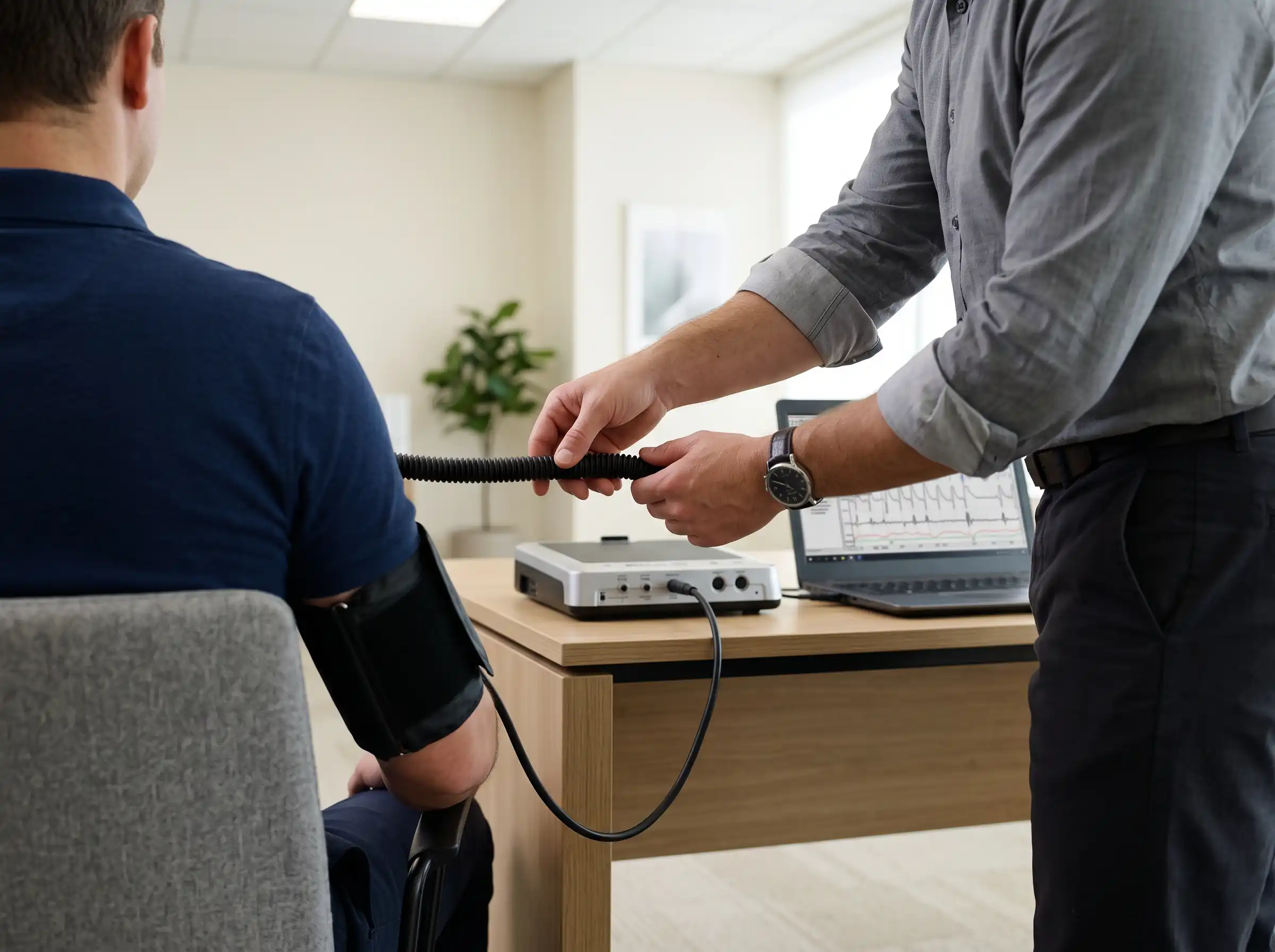
The instrument is set up
Setting up happens once, at the start, whatever the number of people. A closed office with the door shut and no interruptions is what the room needs to be.
-
The examinee is briefed too
All of the case facts are discussed with the person being tested before their examination starts. No question arrives as a surprise.
-
The examination itself
Roughly an hour per person, one person at a time, with the instrument recording while the agreed questions are put.
-
The results come to you
Results reach the client within twelve to twenty four hours, in writing, and they are absolutely confidential to the client who commissioned them.
Who and what
Who runs the polygraph test, and what they run it on
Two things decide whether a result is worth anything: the person reading it, and the machine that produced it. Both are answerable here rather than assumed.
The examiner
Every member of the team is a trained examiner rather than an operator, trained to the standard and practices each association requires, and every member works to the American Polygraph standards.
The instrument
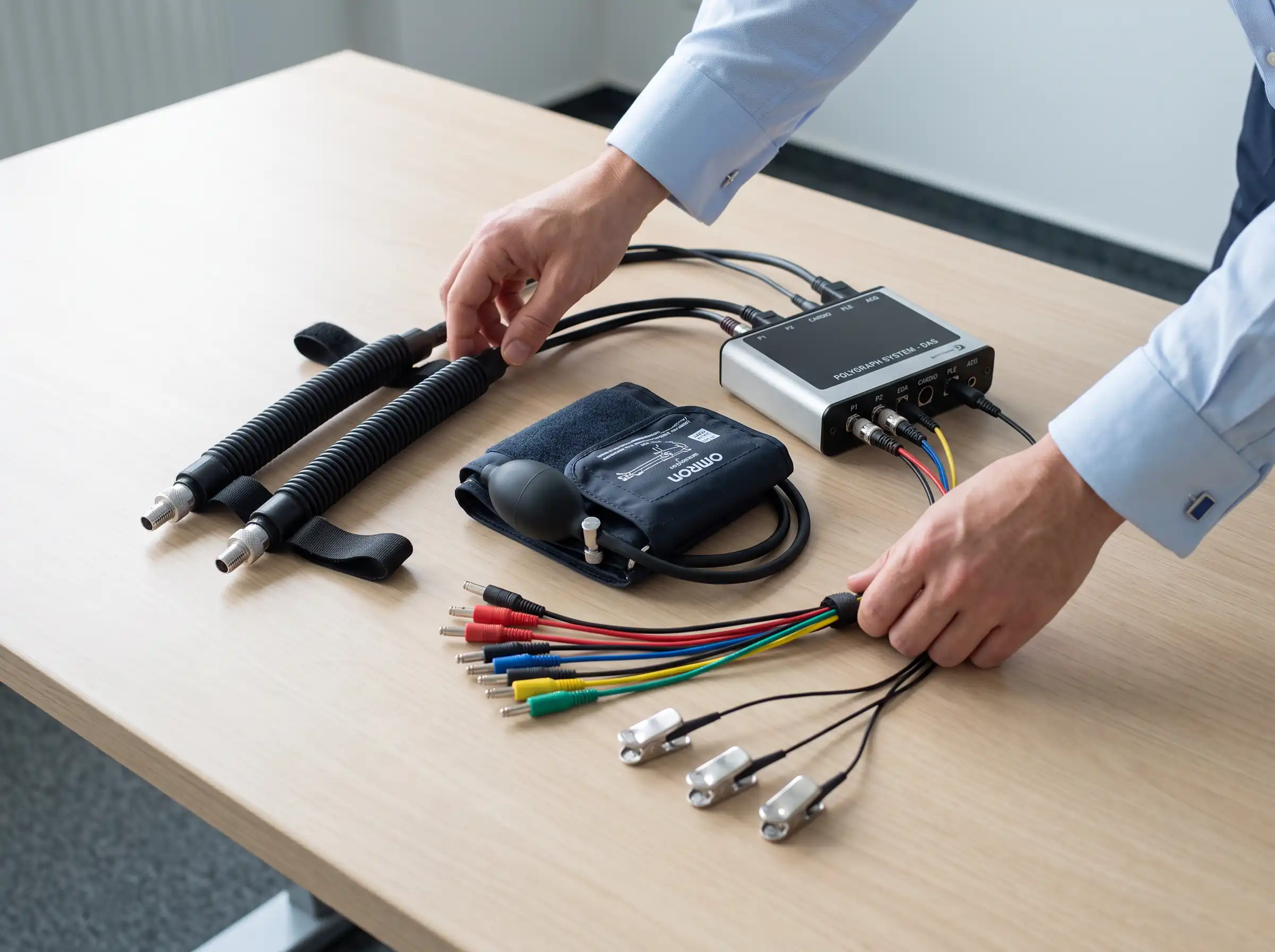
An examination is only as honest as the machine underneath it, so the machines are checked on a schedule and the check is documented rather than asserted.
Instruments
LX 4000 and LX 6000
Calibrated
Once or twice a year, every instrument in service
Calibrated by
The practice's own calibration instrument, in house
Evidence
Each examiner holds a certificate from the CEO confirming their machine is calibrated and in good working order
That last line is the one to ask any polygraph practice for. If nobody can produce it, nobody can tell you what the instrument was doing on the day of your examination.
Where it happens
Where you are is where the examination happens
The examiner travels to the appointment rather than the other way round, and these are the runs made daily. Anywhere else in the country is a question of distance rather than of whether.
Run daily
- Johannesburg
- Pretoria
- Witbank
- Middelburg
- Potchefstroom
- Krugersdorp
- Nelspruit
A fixed rate close to home
Travel inside the immediate Johannesburg and Pretoria range is a fixed charge rather than a calculation, which is what keeps a quote readable and keeps hidden costs out of it. Everything further is worked out on the pricing page.
Across the border when it is asked for
Clients have taken the practice into Eswatini, Botswana and Zimbabwe among other neighbouring countries over the years. Those are quoted case by case rather than off a rate card.
Or at the examination room in Centurion
There is an examination room at the office in The Reeds, Centurion, by appointment only. Private matters are usually run there rather than at a home or a workplace.
Afterwards
What lands in your inbox when it is done
An examination that ends in a phone call is an examination you cannot use. Every one of these ends in a document, and the document is written to be put in front of somebody else.
A full written report
The findings for each person examined, set out so that somebody who was not in the room can follow what was asked and what came back.
Confidential to you
Results are absolutely confidential. They go to the client who commissioned the examination and are not discussed with anyone else.
The questions that were used
The report reflects the questions agreed in the consultation, which is why the consultation is where a weak brief costs you the most.
Usable at a hearing
Where it is going to a disciplinary or the CCMA, the examiner can present it and speak to how the examination was run. That is covered under labour assistance.
A next step where there is one
Where the findings open a question rather than close one, an investigation is the work that follows, and it is quoted separately.
Verification alongside it
For appointments, a criminal background check is commonly run with the examination so that what you were told is verified as well as tested.
Questions
What people ask before booking a test
The ones that come up on the phone most often. Anything about choosing between services is answered on the services page, and anything about money on the pricing page.
Will I be told the questions before the test?
Yes. The questions are drawn up in the consultation and all of the case facts are discussed with the person being examined before their examination starts. Nobody is tested on a question they have not already seen. Surprise questions are not how a polygraph examination is run, and a result taken from one would not be worth defending.
How long does a polygraph test take?
Budget the consultation at twenty to thirty minutes, the setup at ten to fifteen, and then roughly an hour for each person examined. The consultation and the setup happen once, whatever the number of people, so a single examination is a short morning and a team is a full day.
That arithmetic is also what decides how many examiners a job needs and how many days it runs to, which is where the figure on your quote comes from.
What sort of room does the examiner need?
A closed office with the door shut and no disturbance. It does not have to be a large room or a special one, but it does have to be a quiet one that nobody walks into, for the whole of the examination. An interrupted examination is a compromised examination, so the room is worth arranging properly before the day.
Do I come to you, or does the examiner come to me?
The examiner comes to you, and travel is a line on the quote rather than a surprise on the invoice. Johannesburg, Pretoria, Witbank, Middelburg, Potchefstroom, Krugersdorp and Nelspruit are run daily, and the rest of the country is a matter of distance. Private and infidelity matters are the exception and are usually run in the examination room at the Centurion office instead.
Who sees the result?
The client who commissioned the examination, and nobody else. Results are absolutely confidential. Where an employer commissions the examination the employer receives the report, and where a private client commissions it the report is theirs alone.
Can the report be used at a disciplinary or the CCMA?
It is written so that it can be. Beyond the document itself, the examiner is trained to be called and to speak to how the examination was conducted, which is the part a hearing usually wants. Ask for that when you request the quote so the engagement is set up for it from the start.
How do I know the instrument is reading correctly?
Every instrument in service is calibrated once or twice a year against the practice's own calibration instrument, and each examiner holds a certificate from the CEO confirming that their machine is calibrated and in good working order. Ask for it. It is a fair question to put to any polygraph practice, and a practice that cannot answer it cannot tell you what its instrument was doing on your day.
What does a polygraph test cost?
Every price is published rather than quoted on request, from one person up to twenty five, with travel and the consultation fee set out beside them. Work your own number out on the pricing page, then ask for the written quote that confirms it.
Next step
Tell us what happened, and we will tell you what it needs
The quote is free, it is formal, and it comes back by email. If you are not sure which examination fits, say what has happened and the right one comes back on the quote rather than being something you have to work out first.